Glycine: the amino acid that turns down your thermostat at night

The smallest amino acid in your body was named for dessert. Glycine comes from the Greek glykys, sweet, because the chemists who first isolated it in 1820 noticed it tastes faintly of sugar. It is also the least glamorous molecule you own: two carbons, a scrap of nitrogen, the structural equivalent of a paperclip. Roughly a third of the amino acids in your collagen, the protein holding your skin and joints together, are glycine, and your body makes it as well as eating it. Paperclips get used everywhere.

So why does this humble molecule keep turning up in conversations about deep sleep? Because of a thermostat.
One of the body's own signals for sleep onset is a falling core temperature. In the hour or two before sleep, blood flow shifts toward the skin of your hands and feet, heat radiates away, and the core cools slightly. Warm extremities, cooling middle: that gradient is part of how the body announces night to itself. It is also why a hot room wrecks sleep from the inside, and why the old advice about warm socks is not as silly as it sounds.

Here is where glycine earns its place in the story. Researchers giving people glycine in the evening have recorded a small extra drop in core body temperature, the same direction the body was already trying to go, with the heat leaving through those peripheral blood vessels. Participants in those studies also reported that their nights felt better. Reported and felt are the honest verbs, and we will not dress them up as more; but nudging a dial the body itself uses as a sleep signal is an unusually elegant mechanism, and it is why glycine gets mentioned specifically around deep sleep rather than around winding down.
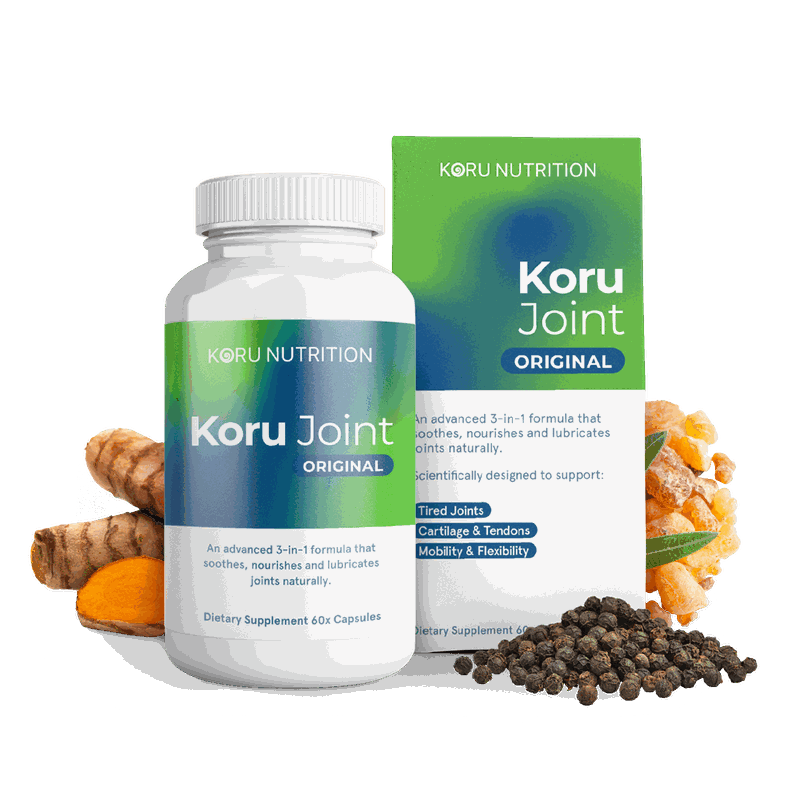
If you read supplement labels, you have probably swallowed glycine without noticing. Magnesium glycinate, the form of magnesium most recommended for evening use, is magnesium bound to two glycine molecules; glycine is the carrier that makes the mineral gentle and well absorbed. In the Koru Nutrition range, Koru Sleep uses exactly that form.
An honest note, because this series trades on them: the glycine that hitches a ride with a glycinate mineral is a small fraction of the amounts used in the temperature research, which typically ran to a few grams. Nobody should buy a glycinate product expecting the thermostat effect from the carrier alone. The form is chosen for the magnesium's sake; the glycine is a pleasing passenger, not the engine.
The free version of the same trick costs nothing: cool the room, warm the feet, and let the gradient do what it has done every night of your life. Glycine is not magic. It is the body's own paperclip, holding together a mechanism that was always yours.