Melatonin in New Zealand: why the rules are different here

Every so often a New Zealander comes home from a trip to the United States with a bottle of melatonin gummies from the supermarket and a question: why can I buy this next to the breakfast cereal in Portland but not in Palmerston North? The answer is a regulatory choice this country made in 1996, and it only started shifting in 2025.
Melatonin itself is not exotic. It is a hormone your own brain releases every evening as the light fades, the body's internal signal that the day is ending. The regulatory question has never been whether melatonin exists in you; it is what category the bottled version belongs to. The United States answered "dietary supplement" in the 1990s, which is why it sits beside the vitamins there. New Zealand's Medicines Classification Committee looked at the same substance in 1996 and answered "medicine", specifically a prescription medicine. A hormone taken to change how the body behaves, the reasoning went, deserves the oversight medicines get.
That single word, medicine, is why melatonin has never appeared in New Zealand's supplement aisle. Under our law a dietary supplement cannot contain it, so anything lawfully sold as a supplement here does not include melatonin, whatever you may have read on an overseas website.
What changed in 2025
The wall has been coming down in stages. In 2019 the rules relaxed a notch: pharmacists could supply melatonin to people 55 and over after a consultation. Then came 2025, the busiest year in melatonin's New Zealand history. In June, the classification changed so that approved melatonin products could be sold in pharmacies without a prescription and without a consultation. The first products were approved in September 2025. And in October 2025 the door opened further, allowing companies to seek approval of products for adults 18 and over for short-term use by people having ongoing trouble sleeping.

Note the load-bearing word: approved. The classification change does not put melatonin on every shelf; it lets manufacturers apply, product by product. What you will actually find depends on which products have been approved and which your pharmacy stocks, so availability varies and is still settling. For under-18s melatonin remains prescription-only, and it is not a funded medicine for most people, so you pay the retail price.
Built for the short term, on purpose
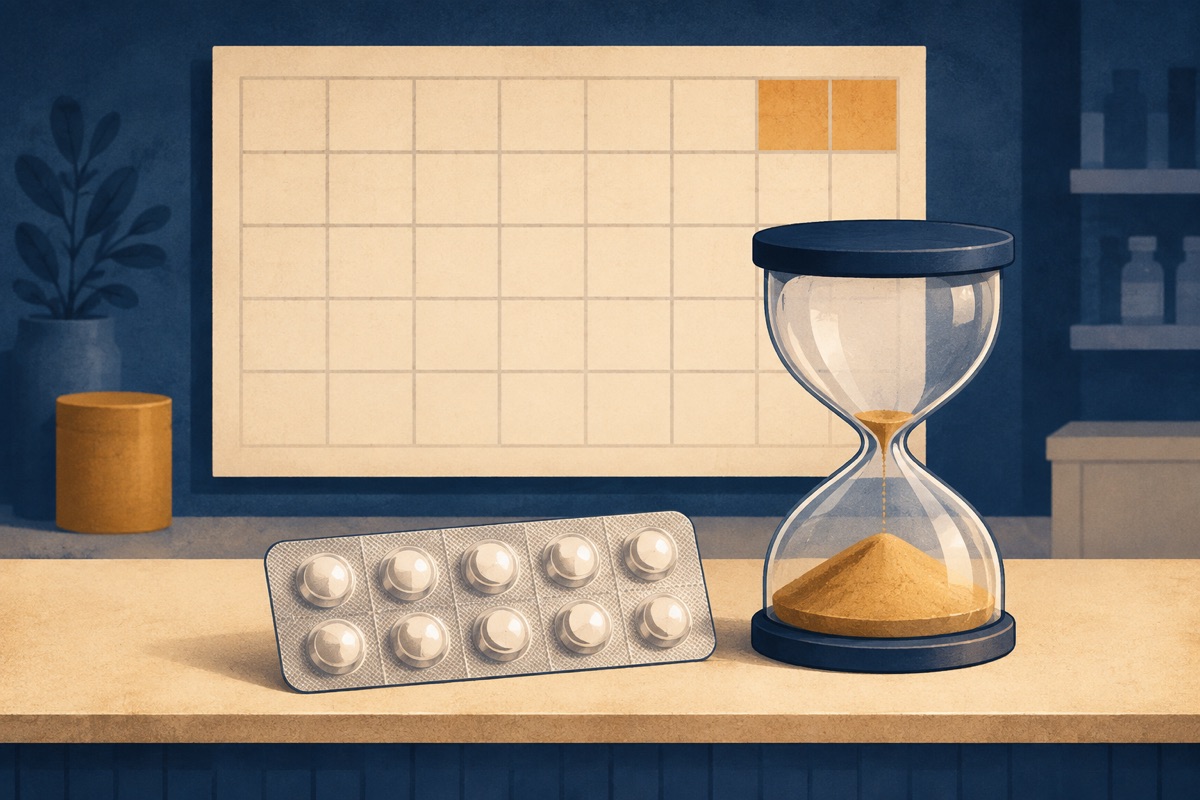
Look closely at what was approved and a pattern appears. The pharmacy-shelf products are limited to small packs: up to ten days' supply for sleep disrupted by travel across time zones, or up to thirty days. A pharmacist can supply adults 55 and over for longer, but even that route is capped at thirteen weeks. None of this is stinginess. The approvals are shaped around how melatonin has actually been studied, and most of that research runs for a few weeks. What melatonin does when taken every night for years is a genuinely open question: the long-term studies mostly have not been done. The US National Institutes of Health puts it plainly enough, saying the safety picture for short-term use is reassuring and the long-term picture is much less studied. New Zealand's small packs are that uncertainty, printed as a pack size.
Why older people should take the most care
This matters most for the group the 2019 rules were written for. As we age, the body clears melatonin more slowly, so an evening dose can still be at work the next morning. At thirty-five, a groggy start is an inconvenience. At seventy-five, it is a different kind of risk: on the stairs, behind the wheel, on a frosty path to the letterbox. Overseas health agencies single out daytime drowsiness in older adults for exactly this reason, and researchers who study melatonin in later life keep landing on the same advice: if it is used at all, lower doses are usually enough, because the older body holds onto it longer. The overseas habit of escalating strengths, five milligrams, then ten, transfers to later life particularly badly.
Melatonin can also interact with medicines that are common in later life: blood thinners, blood pressure medicines, diabetes medicines and some antidepressants. This is why the pharmacist conversation is a feature, not a hurdle. The person behind the counter is not gatekeeping for sport; they are checking an interaction list you cannot see.
The suitcase question
What about simply bringing it back from overseas? Importing unapproved melatonin for personal use still requires a prescription; the 2025 changes did not open the mailbox. And the overseas bottles themselves deserve a sceptical eye. Researchers testing them have repeatedly found actual melatonin content that does not match the label, sometimes by several times in either direction, and Medsafe warns that unapproved imported products can be poor quality. The approved-product system exists precisely so the number on the box is the number in the tablet.
Two practical takeaways. If you want melatonin in New Zealand, the pharmacy counter is the place to ask, and what they can offer is changing as approvals land. But notice what the whole system is telling you: the packs are small because this is a short-term tool, not a nightly fixture for the years ahead, and that goes double past retirement age. And if a product sold here as a supplement claims to contain melatonin, something is wrong: either the label or the law is being ignored, and both are worth walking away from.
It also explains a quirk of the local market that puzzles returning travellers: New Zealand's sleep-support formulas are built from ingredients like magnesium, L-theanine and traditional herbal extracts rather than the hormone itself. That is not a formulation fashion. It is the law doing exactly what it was set up to do in 1996, one loosening stage at a time.