Cards, crosswords and what actually keeps a mind busy
The crossword has become the official fitness programme of the ageing brain. "Use it or lose it," says everyone, gesturing at the puzzle page, and the theory has the great advantage of being pleasant to follow. It deserves an honest audit, because it is half right, and the wrong half is the one most people practise.
First, the uncomfortable part. The studies linking puzzles to sharper ageing are mostly observational: researchers find that lifelong puzzle-doers tend to stay sharper, which is true, and which proves less than it seems. People who do cryptic crosswords into their eighties also tend to read more, have had different jobs and different education, and differ in a dozen other ways from people who do not. The puzzle may be a cause of the sharpness or merely its signature. And practice effects are famously narrow. Do the crossword daily for a decade and you will become genuinely formidable at crosswords, while the improvement stubbornly declines to transfer to remembering why you walked into the garage.
Now the encouraging part, because there is one. When researchers in Texas ran the experiment properly, they did not hand retirees puzzles. They enrolled them, for three months, in the demanding business of learning something new: digital photography or quilting, taught seriously, hours every week. Comparison groups socialised, or did familiar, comfortable activities at home. The new-skill groups came out with measurably better memory. The active ingredient, the researchers argued, was not the photography. It was the strain, the specific discomfort of being a beginner, of doing something you are still bad at.
Comfort, in other words, is the tell. The thousandth crossword is comfortable. The first attempt at Wordle, or bridge, or te reo, or the ukulele, is not, and that awkward, effortful incompetence appears to be what the brain treats as a reason to renovate. The rule of thumb writes itself: if it no longer feels like work, it is no longer working very hard on you.
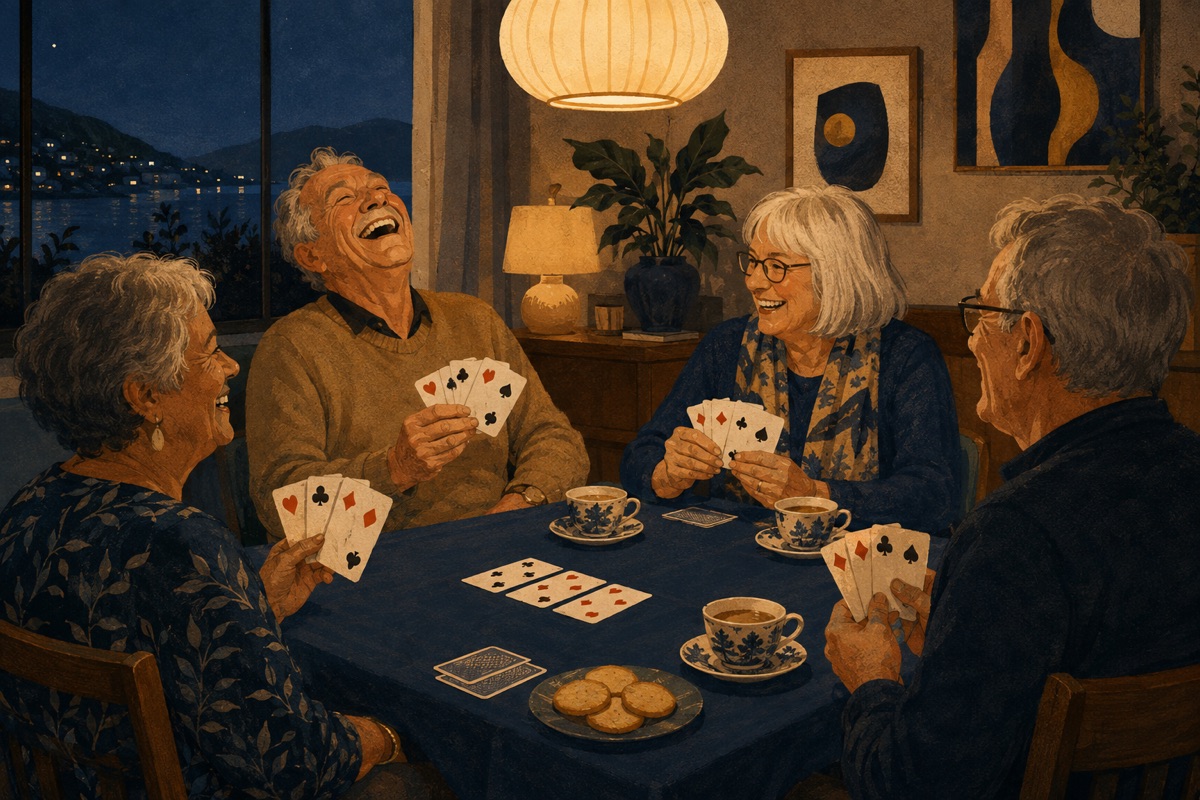
Which brings us to the card table, quietly the best-designed brain gym in the retirement village. A hand of 500 asks you to track what has been played, model what your partner is signalling, and adjust plans on the fly, genuine cognitive work. But it also comes bolted to the other thing the ageing research keeps circling: company. The table talk, the running feud about last week's bidding, the turning up on Tuesday because three people expect you. Cognitive effort and social connection in a single sitting is a remarkable return on a deck of cards.
Nobody here will promise this prevents anything, because the honest evidence does not go that far and this site does not deal in promises. Keep the crossword; it is a pleasure, and pleasures need no defence. Just add, alongside it, one thing you are properly bad at. Being a beginner turns out to be a use of the mind that no amount of expertise replaces.