The checkout chat is doing more than you think
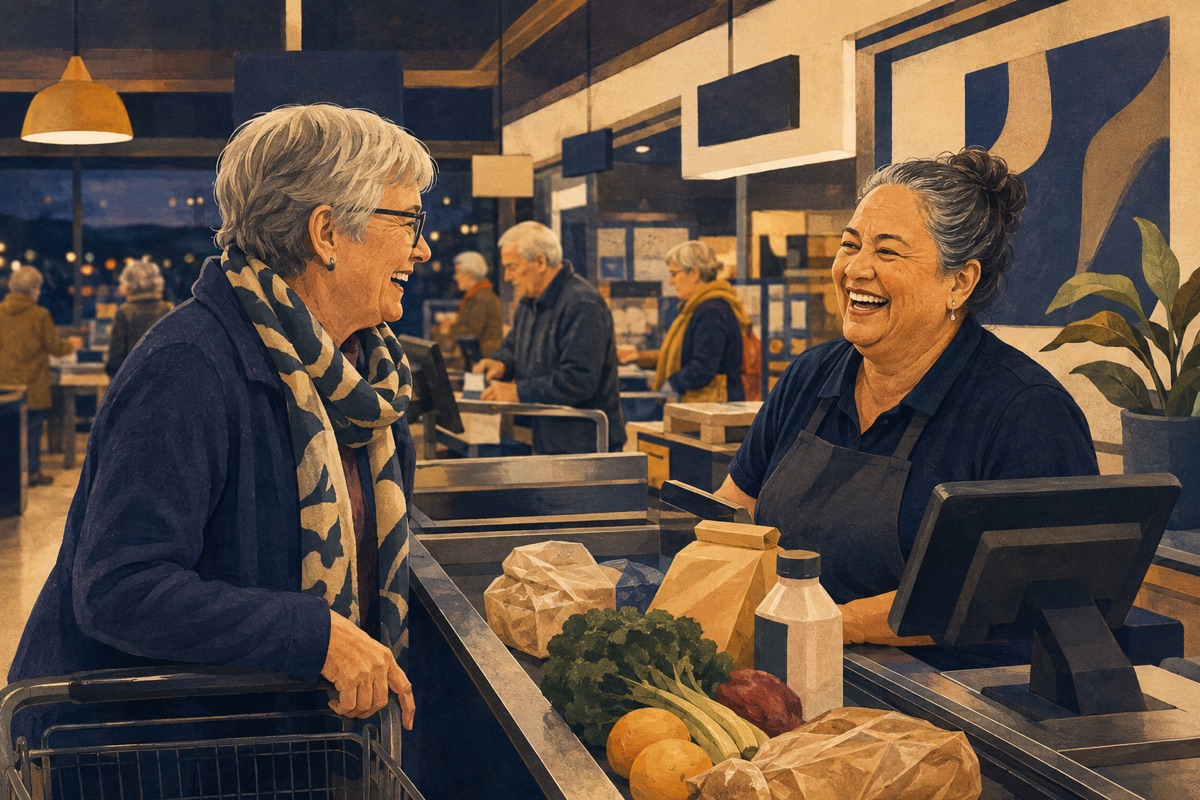
Modern convenience has a curious side effect: it keeps removing conversations nobody meant to cancel. The self-checkout replaced a chat about the weather. Online banking retired the teller who knew your name. The pay-at-pump removed the man who commented on your choice of pie. Each change saved a minute, and none of them asked what the minute had been for.
Social science has an answer, and it comes from an unexpected direction. Researchers at the University of British Columbia ran a simple field experiment in a coffee shop: some customers were instructed to be brisk and efficient with the barista, others to have a genuine short chat, a smile, a moment of actual contact. On the way out, the chatters reported better mood and, more strikingly, a stronger sense of belonging. Thirty seconds with a stranger they would never see again had registered, somewhere deep in the social accounting, as connection.
Sociologists call these relationships "weak ties", an unflattering name for the pharmacist, the librarian, the neighbour you only speak to across the fence, the courier who knows your dog's opinion of him. Strong ties, family and close friends, do the heavy lifting of a life. But the weak ones turn out not to be filler. In diary studies, the days when people interact with more of their weak ties are the days they report more belonging and better mood, over and above whatever their close relationships were providing. The minor characters, it turns out, are load-bearing.
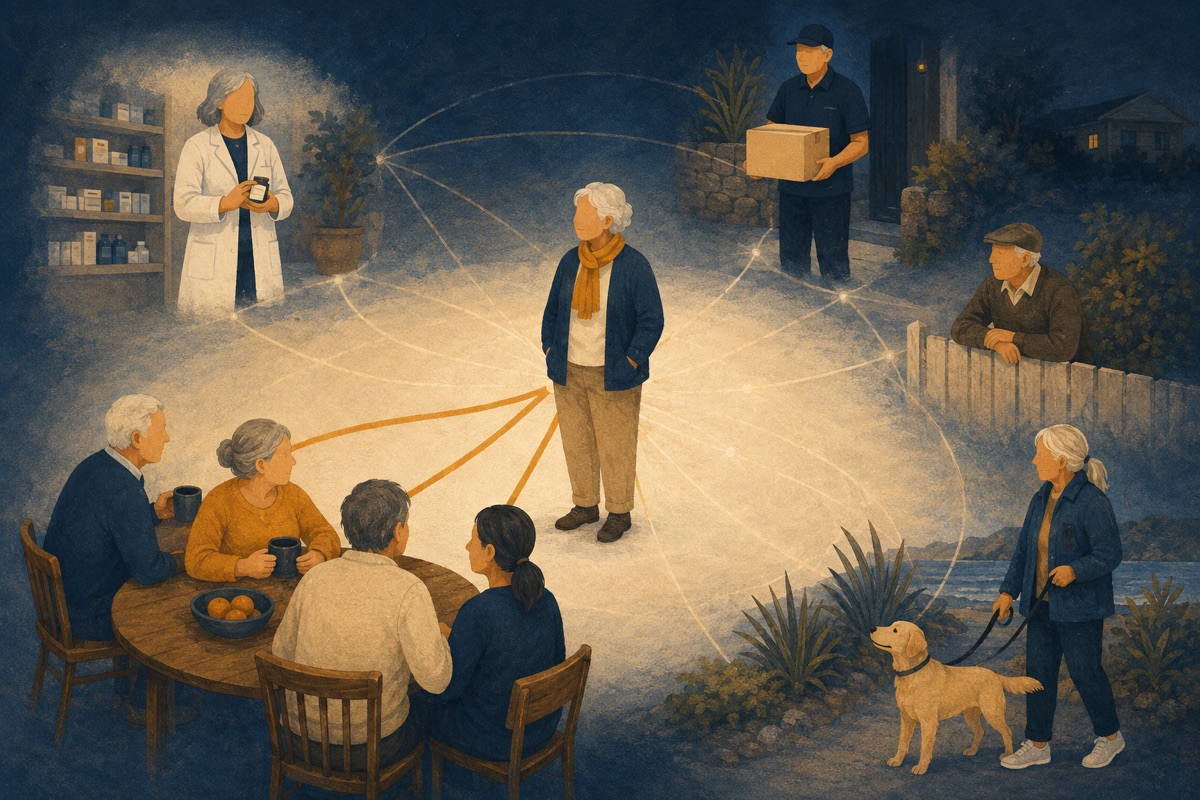
This matters more as life goes on, because the weak ties are exactly the ones that thin without anyone deciding anything. Retirement removes forty incidental conversations a week in one stroke. Friends move to be near grandchildren. The world, meanwhile, keeps installing self-checkouts. Nobody chooses isolation; it accumulates, one convenience at a time. And the broad sweep of research on social connection keeps finding that people with more of it, weak ties included, tend to fare better over the long run in both wellbeing and health.
The repair is almost embarrassingly available. Choose the staffed checkout and let the queue be the price of the chat. Learn the name of the person who makes your coffee, and use it. Ask the pharmacist how their week is going; they field questions all day and are rarely asked one back. None of this requires becoming an extrovert, joining anything, or overhauling a personality. It is just declining, a few times a week, the invitation to be efficient.
The self-checkout saves forty seconds. The human lane spends those seconds on something the research suggests you were quietly living on all along. As trades go, it is not a close call.