Why the long hot shower leaves winter skin itchy

Every winter, the same quiet epidemic: shins that itch through trousers, a back that demands the door-frame scratch, skin that turns powdery at the ankles. And every winter the culprit stands in plain sight, hot and pleasant and running at full bore. It is the shower.
To see why, start with what skin actually is at the surface: a wall of flattened, overlapping dead cells, mortared together with natural oils and fats. (Readers of our piece on how creams get through that wall will recognise the picture.) The wall's job is holding water in. The mortar is what makes it waterproof, and the mortar is oil.
Now the kitchen chemistry. Everyone knows dishes wash up better in hot water than lukewarm, and the reason is simply that heat makes water a better solvent for grease. The same physics applies when the greasy film in question is the one on your body. A long, properly hot shower does to your skin's mortar a mild version of what it does to the roasting dish: loosens it, lifts it, and sends it down the plughole.
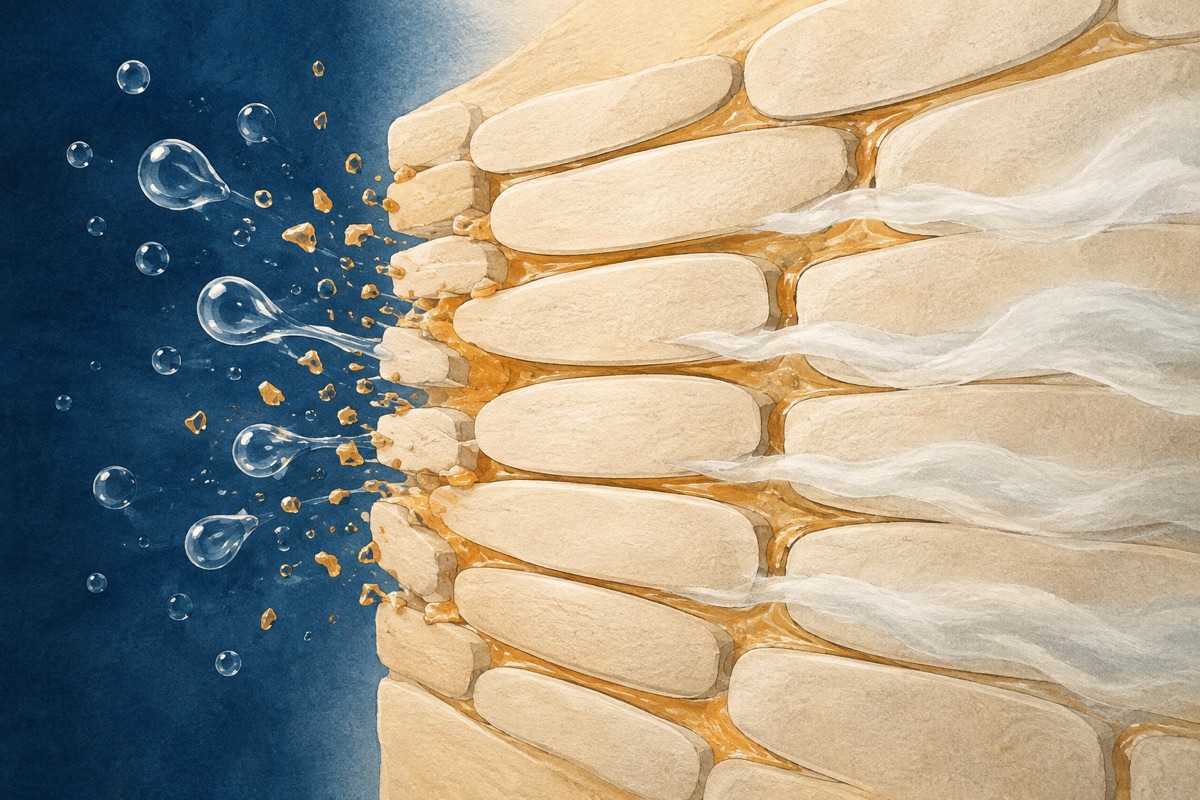
In summer this hardly matters. The air is humid, the skin re-oils itself, and the ledger balances. Winter stacks the deck the other way three times over. Cold air holds less moisture to begin with; heating the house dries it further, so the air is thirstier and pulls water from any surface offering it. And skin makes less oil as it ages, year on year, so the mortar that gets stripped is replaced more slowly than it was at forty. Water escapes through the depleted wall, the flattened cells dry and curl at the edges, and the nerve endings underneath file their complaint. That complaint is the itch.
The fixes are cheap and mildly disappointing, in the way effective things often are. Turn the temperature from hot to warm, and the length from a soak to a wash. Use soap where soap is needed rather than everywhere, since soap is a solvent by profession. Pat dry instead of towelling like you are sanding a fence. Then the one step that repays the most: moisturiser onto skin that is still slightly damp, within a few minutes of stepping out. Applied then, it traps the shower's own water under a fresh layer of mortar instead of arriving after the water has already left.
None of this requires giving up the great winter pleasure of hot water entirely; it only asks for a truce. And an itch that persists despite the truce, or that comes with a rash, has earned a proper look from a GP rather than another guess from a bathroom.