The two o'clock cuppa: how long caffeine really stays with you
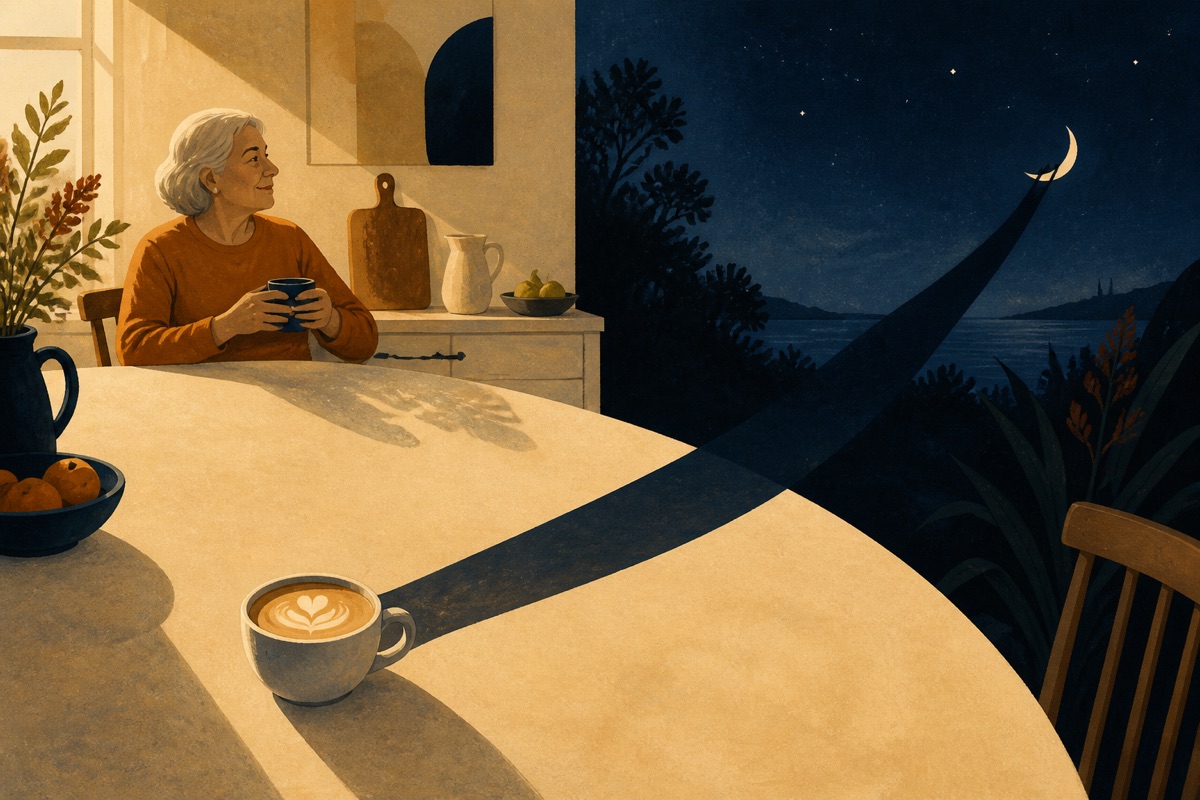
All day long, a chemical called adenosine builds up in your brain. It is the body's tiredness ledger: the longer you have been awake, the more of it accumulates, and the more insistently it presses on its receptors, telling you to wind down. Caffeine's whole trick is squatting. It parks itself in those receptors so the adenosine cannot get in, and the tiredness, though still accruing, goes unread.
This is a genuinely useful trick at seven in the morning. The question is how long the squatter stays, and the answer surprises most people. Caffeine's half-life, the time your body takes to clear half of it, is around five hours. Run the arithmetic on an ordinary afternoon flat white at two o'clock: by seven in the evening half of it is still circulating, and at midnight a quarter of it remains, sitting in the receptors, editing your tiredness down.

A quarter of a coffee does not feel like anything. That is exactly the problem. Nobody lies awake thinking "this is the two o'clock cuppa"; they just find sleep arrives a little later and runs a little shallower, and blame the day they had.
The five-hour figure is an average with real spread. Clearance depends on liver enzymes whose speed is largely inherited, so the range runs from about three hours in the lucky to seven or more in the slow. This is why one person can drink espresso after dinner and sleep like furniture while their spouse is ceilings-gazing from a morning tea. Both are telling the truth; they simply run different machinery.
The doses differ too. A cup of coffee carries very roughly twice the caffeine of a cup of black tea, and green tea sits lower again, which is why the pot of gumboot at three o'clock is a smaller gamble than it looks. Decaf is not quite zero, but close enough that it rarely matters. Chocolate sneaks a little in, dark more than milk.
If your evenings run wired and your nights run shallow, the cheapest experiment available is a fortnight with a two o'clock cutoff: caffeine in the morning, tea before lunch if you like, and after two, decaf or herbal. Two weeks is long enough to see the pattern, and the result belongs to your machinery rather than someone else's average. Plenty of people discover nothing changes, and carry on happily. A surprising number discover the midnight quarter-cup was the whole story. And for anyone auditing the rest of their evening toolkit while they are at it, our guide to what is actually in sleep formulas makes a sensible companion read.