
Hot water bottles and wheat bags: what warmth is actually doing

Somewhere in most New Zealand households, usually in a hall cupboard, lives the oldest piece of comfort technology still in daily service: a rubber bottle you fill from the kettle, or a cloth bag of wheat you spin in the microwave. Both predate almost everything else in the house. Neither has been improved on much, because the thing they deliver, steady gentle warmth, turns out to be doing more than it looks.
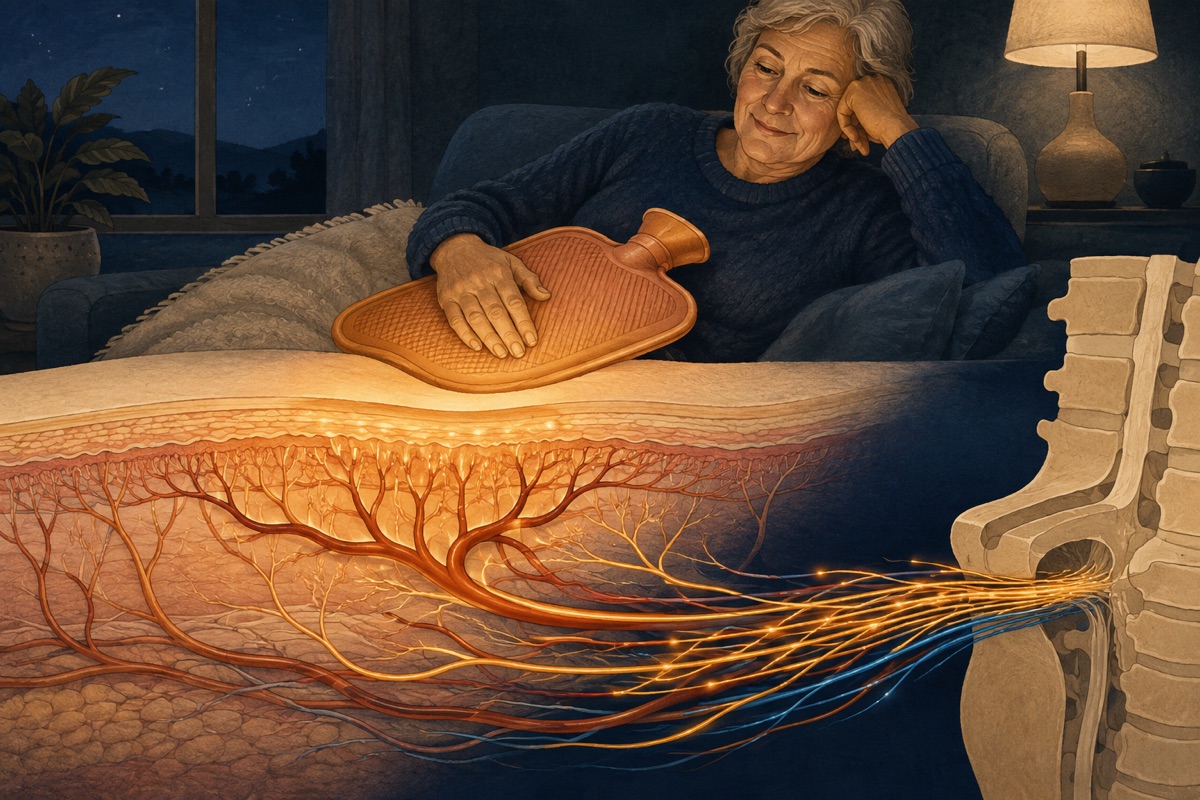
Your skin carries dedicated warmth sensors, part of the same receptor family that won the 2021 Nobel Prize in Physiology or Medicine for the scientists who mapped how nerve endings detect temperature. (The cold-sensing half of that story, and the mint trick that exploits it, is told here.) Lay a warm bottle against your lower back and those sensors start reporting immediately, and the body responds in kind.
Two useful things follow. First, the small blood vessels under the warmed patch widen, and circulation to the area picks up; warmth is an invitation, and blood accepts it. Muscles that have been braced against the cold tend to loosen once they are warm, which anyone who has hunched through a southerly already knows from the inside. Second, there is the traffic effect. Warm signals travel to the spinal cord on fast nerve fibres, and the textbook explanation for why warmth feels so soothing is that this brisk, pleasant traffic crowds the slower signals of ordinary aches and complaints. The warmth is not switching anything off so much as talking over it.
Bottle or bag comes down to the job. A hot water bottle holds its heat longer and suits a bed or a lap. A wheat bag moulds itself over a shoulder or the back of the neck and stays put, which the bottle never manages. Households of long standing usually own both and have strong opinions.
The safety rules deserve one plain paragraph, because they matter more as skin gets older and thinner and senses heat less sharply. Fill a bottle with hot water, never boiling, and always use it inside a cover rather than against bare skin. Rubber perishes: a bottle that looks cracked or smells past it should be retired without sentiment. Wheat bags want short, watched turns in the microwave, since an over-cooked bag can scorch and has been known to smoulder. And if your fingertips have grown casual about temperature over the years, test the heat on the inside of a forearm first, where the skin still tells the truth.
Treated with that small respect, the old technology keeps its job for another generation. Some problems were solved a hundred years ago; the trick is only remembering why the solution works.